

What Are Line Smoothing Treatments and How They Work
- Grace Li
- Nov 25, 2025
- 10 min read
Updated: Jan 29

Fine lines and wrinkles are a natural part of ageing and facial movement — after all, they’re the story of how we use our face to express ourselves. Line smoothing treatments may help those looking to maintain a fresh and balanced appearance. They offer a non-surgical approach to reducing the appearance of facial lines, and, when combined with your doctor’s expertise, may provide a way to retain your natural expression while softening lines you want to reduce or remove.
At My Body Vibes, we approach each wrinkle treatment with a science-led and safety-first lens, and customise our plans to your individual goals and facial anatomy. We want to enhance, not exaggerate.
If you’re in the process of exploring your options, book a free wrinkle consultation with our medical team today. They’ll provide you with a better understanding of your unique situation, as well as their professional guidance to help you feel more informed about your next steps.
In the meantime, here’s a more detailed breakdown of how these injectable treatments work, and what you can expect from the process.
Table of Contents
Understanding Line Smoothing Treatments

Although these treatments work at a muscular level, the lines we see on the skin surface are determined by a combination of collagen, hydration and your natural skin elasticity. The younger our skin is, the thicker and more resilient it is, so expression lines may still be visible when the face is at rest as we age.
The key to subtle and natural-looking results is understanding this relationship between muscle and skin. By targeting the underlying cause of dynamic wrinkles, the lines of expression can be softened, while preserving your unique character and natural facial movement.
This is why the medical team at My Body Vibes focus on a conservative, personalised approach, prioritising balance, proportion and safety at every stage.
What They Are
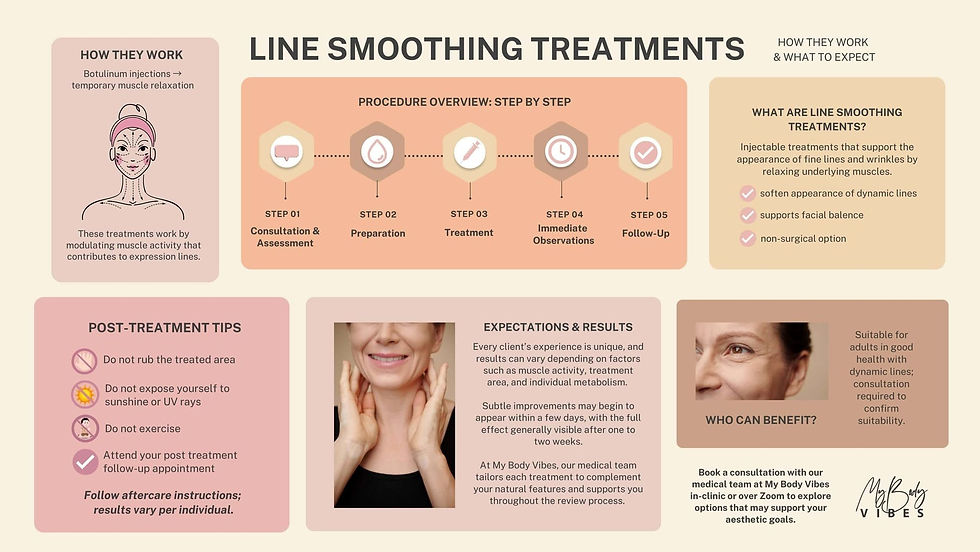
Line smoothing treatments are a type of prescription-only injectable treatment. They work by using a purified protein (botulinum-based) to temporarily relax selected facial muscles by moderating signals travelling between nerves and the muscles they innervate. The result is that when you move your face, the muscle under the skin has less signal to contract, so the overlying skin doesn't wrinkle and stays smoother.
This is why line-smoothing treatments only affect dynamic wrinkles, which are caused by repeated muscle movements such as frowning, squinting and raising the brows. Over time, as those movements become softened, the skin surface itself will look smoother, fresher and more rested.
The effects are temporary and not long-term, and muscle function will gradually return as the product is naturally broken down (metabolised) in the body. This means that your practitioner can refine and evolve your results over time for a natural look.
How They Differ From Other Injectables
While line smoothing treatments focus on muscle relaxation, other alternatives address different aspects of facial ageing and rejuvenation:
Treatment Type | How It Works | How It Differs from Line Smoothing Treatments |
Dermal Filler Treatments | Add or restore volume beneath the skin to enhance facial contour and structure. | Targets volume loss rather than relaxing muscle activity. |
Collagen Booster Treatments | Stimulate natural collagen production, supporting texture, firmness, and hydration over time. | Focuses on long-term skin quality rather than temporary line reduction. |
Bio-Remodelling Treatments | Use hyaluronic-based formulations to deeply hydrate and improve elasticity. | Works at the skin level instead of reducing muscle contractions. |
Liquid Facelifts/ Volumising Treatments | Combine filler and lifting techniques to restore structure and facial balance. | Aims for structural restoration and lifting, not muscle relaxation. |
By understanding how each injectable works, you can make informed decisions with your practitioner about the treatments best suited to your unique skin needs and aesthetic goals.
How Line Smoothing Treatments Work

Your face is made of bones, muscles, ligaments, cartilage and a network of blood vessels and nerves. The skin is the largest organ and is made of three layers: the epidermis, dermis and subcutaneous layer. Facial expressions are controlled by 12 pairs of muscles that move when they receive electrical signals from nerves.
In line smoothing treatments, the aim is to reduce muscle activity. When a muscle is less active, the movement of the skin that covers it is minimised, which can make an expression line appear softer.
The Science Behind Muscle Relaxants
Line smoothing treatments are made from a purified protein called botulinum toxin. They have a highly specific molecular shape that makes it able to selectively attach itself to the nerve endings which control the facial muscles.
The protein is then able to enter these cells and temporarily interrupt the release of the messenger chemical acetylcholine. This chemical tells the muscles to contract, so by blocking its release, the muscle relaxes. Without the repetitive muscle movements that cause dynamic wrinkles, the lines and wrinkles are softened.
The effect of line smoothing treatments is selective, controlled and temporary. With time, the nerve endings eventually recover, which is why repeat treatments are needed to maintain the effect. In effect the protein is a very specific “dimmer switch” for the muscles, softening the lines without over-dampening the natural movement.
This mechanism is well understood and is approved for cosmetic use in accordance with TGA regulations. Treatments can be tailored to an individual’s facial anatomy, expression pattern and aesthetic requirements.
Why Wrinkles Form
Wrinkles generally form as a result of muscle movement and folding of skin, and repeated facial expressions that result in contractions of the muscles beneath the skin. Repeated muscle movement and skin folding over the years results in lines in the overlying skin, sometimes referred to as dynamic wrinkles.
Wrinkles that remain visible even when the face is not moving, sometimes referred to as static wrinkles, form as the skin’s loss of collagen, elastin and volume diminishes the ability of the skin to recoil following skin folding.
Wrinkles can also form on other areas of the body such as the neck, where lines are sometimes described as “necklines” or horizontal bands. In addition to muscle activity and the resulting skin folding, the neck skin may fold naturally as the head is bent forward. The aging process also plays a role, as does sun exposure and other lifestyle factors, as well as thinning of the skin’s underlying connective tissue, whether the wrinkles are dynamic or static.
Who Can Benefit from Line Smoothing Treatments

Line smoothing treatments may be appropriate for a broad spectrum of individuals, depending on their age, skin type, and personal goals. Ideal candidates often include adults who have begun to notice the initial signs of aging, such as lines on the forehead, between the brows, or around the eyes, and who desire to soften these expressions while maintaining a natural appearance.
Those with healthy skin and realistic expectations about the results may experience the most satisfactory outcomes. Lifestyle factors, including sun exposure, smoking, and skincare habits, can also play a role in both the development of lines and the duration of the treatment's effects.
Safety is a crucial factor to consider. Line smoothing treatments are generally safe when performed by a qualified, trained practitioner, but they are not appropriate for everyone. Pregnant or breastfeeding individuals, as well as those with certain neuromuscular or allergic conditions, may be advised against treatment.
A thorough consultation with a medical professional is essential to discuss individual health history, medications, and any potential contraindications before proceeding, ensuring the treatment is tailored safely to each person's needs and goals.
The Procedure: What to Expect Step by Step
Undergoing a line smoothing treatment is a straightforward, minimally invasive process that’s designed to fit comfortably into your day. Understanding what to expect before, during, and after your appointment can help you feel confident and prepared.
The overall process typically follows a few key stages:
Consultation and Assessment
An in-depth consultation is offered before each and every treatment. Your practitioner will take the time to discuss your goals, evaluate your facial anatomy, and identify the individual muscles that give rise to your facial expression lines.
Questions about your medical history, current medications or supplements and any previous cosmetic treatments may also be discussed to ensure the most safe and effective treatment plan is selected for your needs.
Preparing for Treatment
Prior to treatment, the area to be treated will be gently cleansed of any makeup or skincare products. Numbing is rarely necessary as the injections are fast and utilise an ultra-fine needle, but a topical numbing cream or ice pack may be applied if desired. Your practitioner will mark or visually determine the individual muscles to be targeted for product placement.
Treatment Process
Treatment usually only takes a few minutes, and small, individualised doses of the line smoothing product are administered into specific muscles. You may experience a momentary, mild sting or pressure where the injections are given.
Following treatment, you should expect some minor redness or pinpoint marks, which typically resolve within minutes to a few hours. There is no significant downtime and most people return to their normal activities immediately following the appointment. Individual responses and visible results can vary depending on factors such as skin type, muscle strength, and lifestyle.
Follow-Up and Monitoring
A follow-up review appointment is typically scheduled approximately two weeks after the treatment to monitor results and address any questions or concerns you may have. When clinically indicated, some touch-up treatments may be administered at this visit to help fine-tune results.
Patients' results may vary; results develop over a period of several days, with the full result being achieved approximately one to two weeks after treatment. At this time, aftercare guidelines and an ongoing maintenance schedule are reviewed to help you achieve and maintain consistent, natural-looking results.
Post-Treatment Care Tips
Skin care after line smoothing is generally minimal, but some practices can support a more comfortable healing experience and help your results look their best. For a day or two, you should avoid touching or massaging treated areas and forgo strenuous workouts, saunas, and hot yoga classes. Heat and vigorous circulation can influence the product as it settles.
Try to sit or stand for a few hours after treatment, and avoid lying flat on your back or bending forward for long periods. You should also avoid alcohol and sun exposure on the day of your procedure. The skin around treatment areas may be mildly red or tender, or may have small red or purple dots where you received injections. A cool compress can help, and you can use makeup and skin care products as you normally would, but avoid applying them directly to the skin where you received the treatment for the rest of the day.
Your practitioner will give you individualised aftercare instructions at your consultation. In general, contact your clinic if you experience prolonged or excessive swelling, redness, or bruising. Unusual changes in skin colour, persistent discomfort or itching, and other unexpected reactions can also occur, although these are rare. It’s always better to action on the side of caution and contact your clinic if you have any concerns about your skin care after line smoothing.
Healing time and experience, as well as your results, will vary from person to person.
Quick Guide: Line Smoothing Treatments
Frequently Asked Questions (FAQs)
Here are some questions our customers ask about line smoothing treatments.
Is It Painful?
The line smoothing process is mostly pain-free and comfortable for most patients. The injection of product is made using a very fine needle and the patient may feel a quick, mild sting or pressure. This sensation is only temporary and if you have concerns about your sensitivity, a topical numbing cream or ice pack can be applied by your practitioner to help make the process as comfortable as possible.
Are There Side Effects?
Side effects of line smoothing injections are usually minor and short-lived. Slight redness, small marks or mild swelling may be visible at the injection site but these will typically subside within a few hours. Minor bruising may also occur on rare occasions. Your practitioner will offer advice about aftercare to help minimise any potential side effects.
As with all medical procedures, it’s important to be aware that some less common reactions are possible, so it’s always worth contacting the friendly team at My Body Vibes if you notice any persistent discomfort, swelling or changes in the treated area.
Can I Combine with Other Treatments?
Line smoothing treatments are frequently used in conjunction with other cosmetic procedures like dermal fillers, skin boosters or laser treatments to create a more comprehensive rejuvenation plan. The best approach and combination will depend on your skin type, goals and the treatments you’re considering. Your practitioner will be able to design a personal plan and advise on the safest order and timing for multiple appointments.
Who Should Avoid Line Smoothing Treatments?
Line smoothing treatments are not suitable for everyone. Generally, they are not recommended for people who are pregnant or breastfeeding and people with certain neurological or allergic conditions. Your practitioner will review your medical history and discuss any possible contraindications during your consultation.
Guidance from Our Medical Team
All clients are unique and at your consultation, our medical team will take the time to understand your goals, evaluate your facial anatomy and map out a plan that suits your natural features and comfort level. This is an important part of the process to ensure your treatment is both safe and bespoke to you.
Consultations can be booked in-clinic or online via Zoom. A qualified medical practitioner will take you through your medical history and any questions you may have in addition to going over the treatment process in detail — what to expect before, during and after your treatment session. You will also be able to discuss different treatment options and receive candid, medically informed advice about what is most suitable for you.
Our team is dedicated to providing safe, natural-looking results and ensuring you feel supported every step of the way, from your consultation all the way through to aftercare. Whether you are new to line smoothing or looking to maintain previous results, our clinicians are here to help you with care and expertise.
Supporting Your Natural Confidence Safely
Specialising in cosmetic care, My Body Vibes has built a reputation in Victoria as an expert that pairs advanced techniques with a warm and welcoming vibe. Since 2019, we’ve had the goal of making professional, medically-led cosmetic treatments more accessible to more people through affordable and transparent pricing. We have clinics in Carlton, Highpoint, Fountain Gate, Bayside and Eastland and our philosophy is simple: beauty should feel empowering, never pressured.
Honest advice, clinical excellence, and outcomes that enhance, not change, who you are is our focus from consultation to aftercare.


Comments